

Stefano Maria Iacus
European Centre for Algorithmic Transparency, Joint Research Centre
European Commission
Stefano Maria Iacus is a data scientist and statistician, currently serving as an officer at the Joint Research Centre of the European Commission. Until 2025, he was Senior Research Scientist and Director of Data Science and Product Research at the Institute for Quantitative Social Science (IQSS), Harvard University, where he advised on research strategy and software development.
He began his academic career at the University of Milan in 1999, became full professor of statistics in 2015, and founded the Data Science Lab. Since 2006, he has been a recurring visiting professor at the University of Tokyo, and since 2019 has contributed to the European Commission’s work on new data sources for policymaking.
Beyond academia, Prof. Iacus co-founded two startups in social media analytics and quantitative finance. He has published numerous books, articles, and open-source software in fields including causal inference, sentiment analysis, computational statistics, and quantitative finance.
He earned his B.Sc. in Statistics, magna cum laude, from Sapienza University of Rome (1995), a Ph.D. in Statistics from the University of Padua (1998), and a Ph.D. in Mathematics from Le Mans University (1999).
Title of the talk:
Data Science for a Better World: Building a Safer Digital Environment
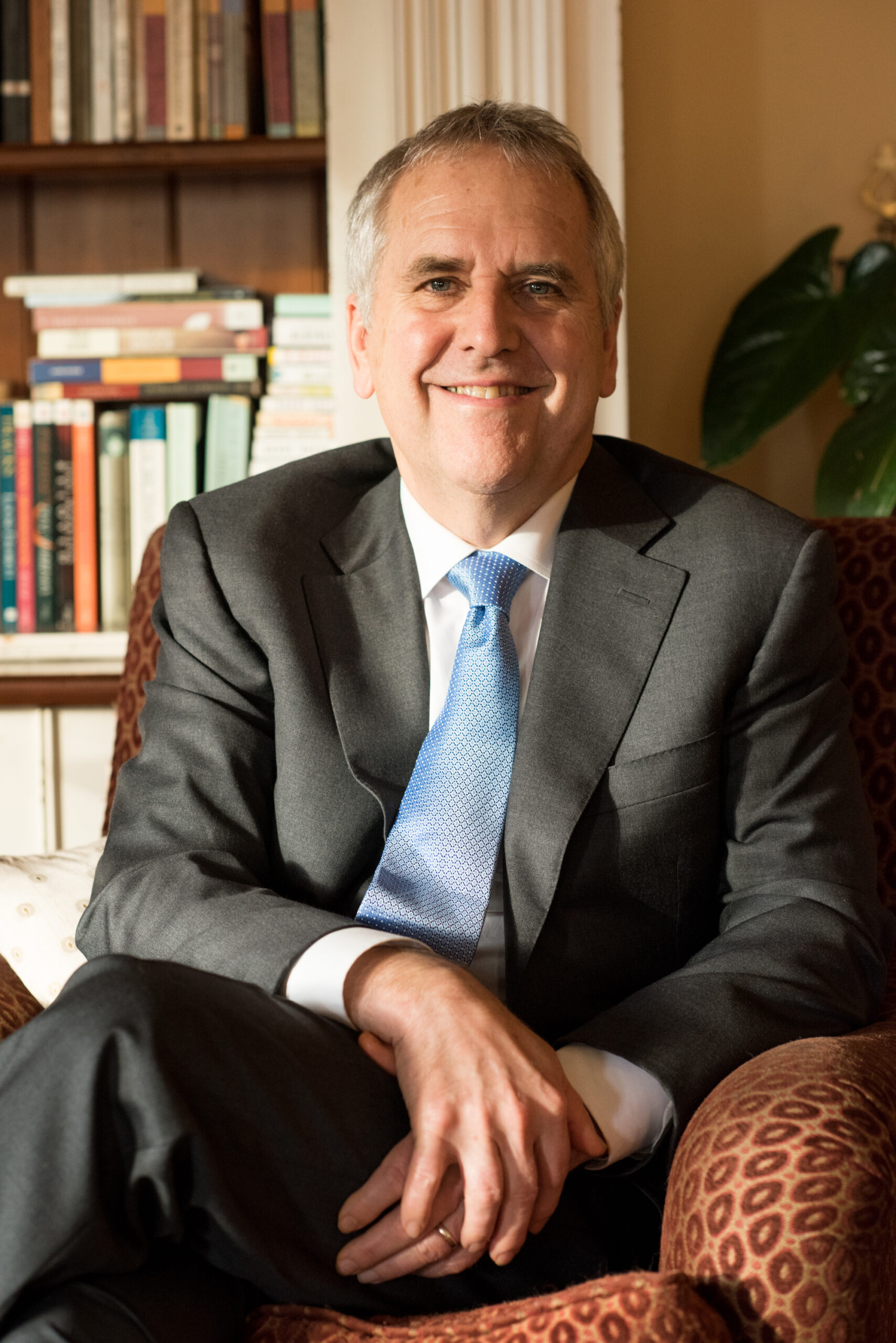
Michael I. Jordan
University of California, Berkeley, USA
Inria Paris
Michael I. Jordan is Senior Researcher at Inria, Paris, and is the Pehong Chen Distinguished Professor Emeritus in the Department of Electrical Engineering and Computer Science and the Department of Statistics at the University of California, Berkeley. He received his Masters in Mathematics from Arizona State University, and earned his PhD in Cognitive Science in 1985 from the University of California, San Diego. He was a professor at MIT from 1988 to 1998. His research interests bridge the computational, statistical, cognitive, biological and social sciences.
Prof. Jordan is a member of the National Academy of Sciences, a member of the National Academy of Engineering, a member of the American Academy of Arts and Sciences, a Foreign Member of the Royal Society, and a Foreign Member of the Chinese Academy of Sciences. He is a Fellow of the American Association for the Advancement of Science. He was awarded the BBVA Foundation Frontiers of Knowledge Award in Information and Communication Technologies in 2025. He was the inaugural winner of the World Laureates Association (WLA) Prize in 2022.
He received the Ulf Grenander Prize from the American Mathematical Society in 2021, the IEEE John von Neumann Medal in 2020, the IJCAI Research Excellence Award in 2016, the David E. Rumelhart Prize in 2015, and the ACM/AAAI Allen Newell Award in 2009. He gave the Inaugural IMS Grace Wahba Lecture in 2022, the IMS Neyman Lecture in 2011, and an IMS Medallion Lecture in 2004. He was a Plenary Lecturer at the International Congress of Mathematicians in 2018.
In 2016, Prof. Jordan was named the “most influential computer scientist” worldwide in an article in Science, based on rankings from the Semantic Scholar search engine.
Title of the talk:
Emerging Challenges at the Tripartite Interface of Computation, Economics, and Inference
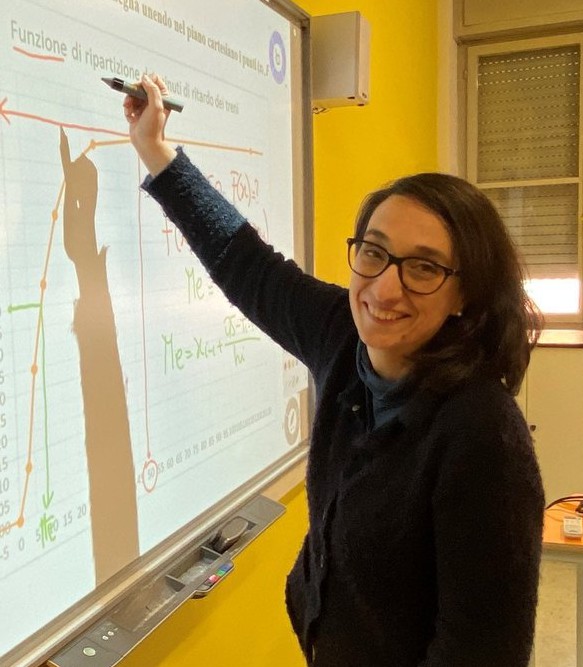
Maria Giovanna Ranalli
University of Perugia, Italy
Maria Giovanna Ranalli is Full Professor of Statistics at the University of Perugia, Italy, where she also earned her PhD in Statistics in 2003. She has been a Post-doc researcher at Colorado State University, Fort Collins, between 2003 and 2005. Her research focuses on statistical methods for the production of official statistics and for socio-economic, environmental, and health applications. She has contributed particularly to the literature on nonparametric regression methods for finite populations and on small area estimation.
Over the years, she has advised several institutions on survey methods, including ISTAT (Italian National Statistical Office), where she has been a member of the Methodology Advisory Board since 2016, as well as the OECD, European Central Bank, FAO, and national and local Environmental Protection Agencies.
Prof. Ranalli currently serves as Associate Editor for JRSS-C (Journal of the Royal Statistical Society – Series C), JASA (Journal of the American Statistical Association), JOS (Journal of Official Statistics), SMAP (Statistical Methods and Applications), and JSSAM (Journal of Survey Statistics and Methodology). She is an elected fellow of the International Statistical Institute, was Vice-President of the International Association of Survey Statisticians (IASS, 2021–2023), and Coordinator of the Survey Sampling Group of the Italian Statistical Society (2019–2021).
Title of the talk:
Valid inference from new data sources: what can we learn from the experience of handling complex sampling designs?
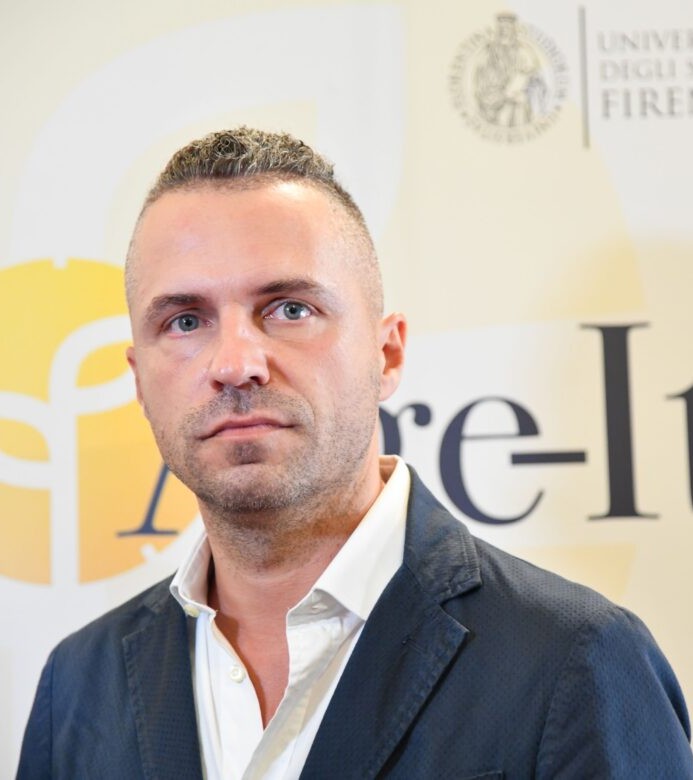
Daniele Vignoli
University of Florence, Italy
Daniele Vignoli is Professor of Demography at the University of Florence, Italy. He is Scientific Director of the PhD Program in Life Course Research, Scientific Coordinator of the University of Florence Population and Society Unit, and Scientific Coordinator of the Florence Ageing Research Centre (Age.Florence). He served as President of the Italian Association for Population Studies from 2023 to 2025 and is Editor-in-Chief of GENUS – Journal of Population Sciences.
In 2017, he was awarded an ERC Consolidator Grant on Economic Uncertainty and Fertility in Europe. He is currently Scientific Coordinator of the Age-It Research Programme (Ageing Well in an Ageing Society), funded by the National Recovery and Resilience Plan (~115 million Euros).
His research focuses on family demography, social demography, and life course studies. He has received numerous recognitions, including the Dirk J. van de Kaa Award for Social Demography from the European Association for Population Studies in 2020, and the European Demographer Award from Population Europe and the network of Europe’s leading demographic research institutes in 2023.
Title of the talk:
Uncertainty and Fertility